Sloping sites can feel daunting at first glance, but they also present some of the most rewarding design opportunities. With the right approach, changes in level can define character, create drama, and unlock views that flat sites can’t match. At Inspired Exteriors, our team of landscape architects sees each gradient as a chance to craft dynamic, functional spaces that work with the land rather than against it.
Designing landscapes on sloping sites is about balance. It combines engineering precision with creativity to create outdoor spaces that are practical, enduring, and beautiful.
Understanding the Site Before Design Begins
When designing landscapes on sloping sites, structure determines usability. Retaining walls help level sections for gardens, seating areas, or pathways while allowing for controlled water movement through subsurface drainage.
Materials such as sandstone, corten steel, and concrete are often used for their durability and visual strength. Their textures and tones can tie the garden to the surrounding architecture. For more insight into choosing complementary materials, see our article on Garden Materials That Elevate Your Outdoor Design.
Steps and pathways are equally important. They must feel natural to walk on, following gentle gradients and logical lines of movement. In steep areas, landings or resting zones break up transitions while creating moments for planting or views. Lighting and handrails then enhance safety without sacrificing aesthetics.
Planting Design for Stability and Character
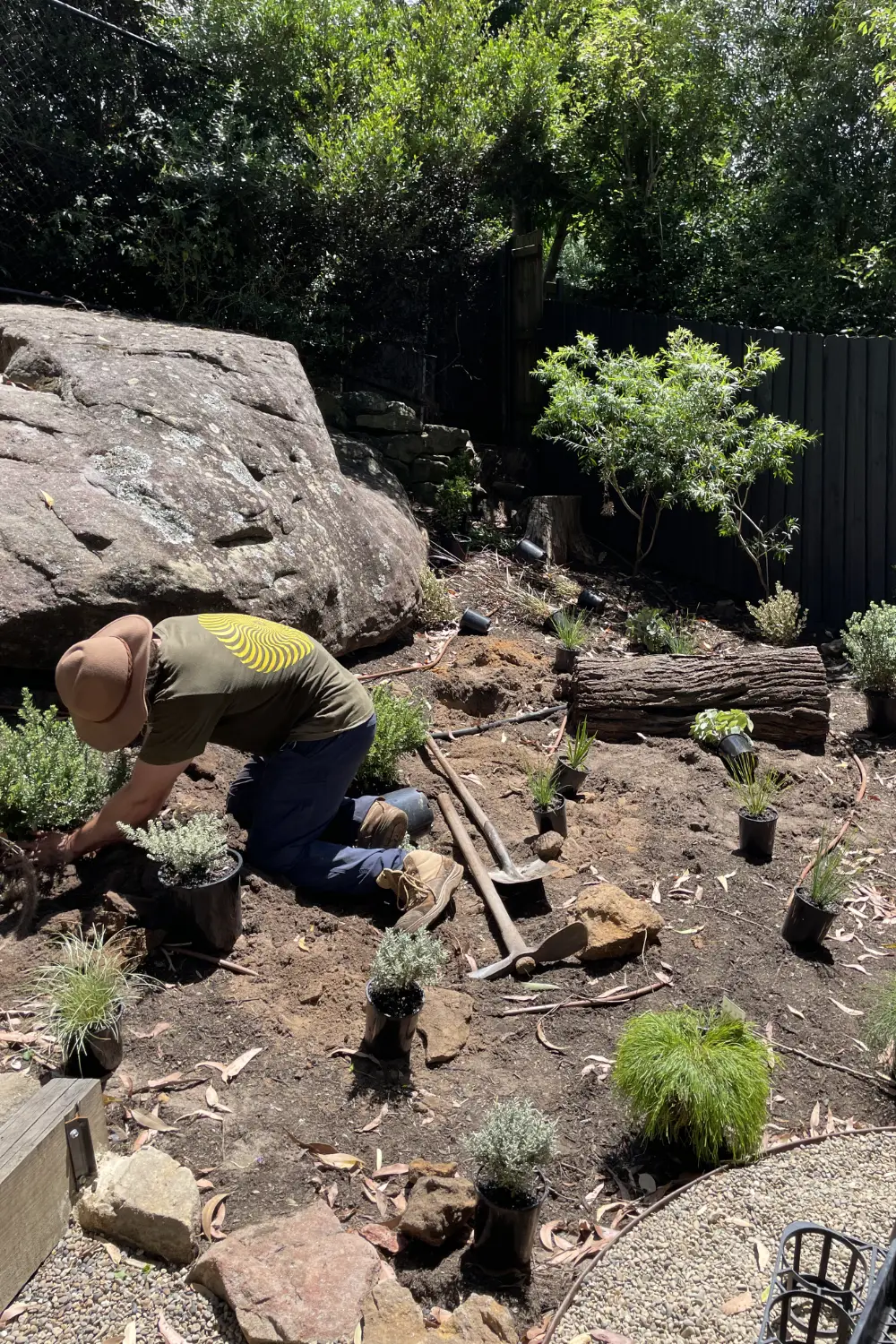
Planting on slopes must serve both functional and visual roles. Deep-rooted species stabilise soil and prevent erosion, while layered planting helps slow water runoff and cool the microclimate.
For larger areas, groundcovers such as Lomandra, Dianella, and Myoporum work beautifully to bind soil and soften retaining edges. Mid-storey shrubs like Westringia, Callistemon, or Grevillea add structure, while taller trees provide shade and scale. Planting should also follow the logic of the slope. Grouping plants by water needs reduces maintenance and ensures each layer thrives naturally. This approach, combined with mulching and consistent irrigation, creates a garden that matures gracefully with minimal intervention. Learn more about practical approaches to planting on slopes from Ozbreed’s guide to Planting on a Slope.
Using Levels to Frame Views and Define Space
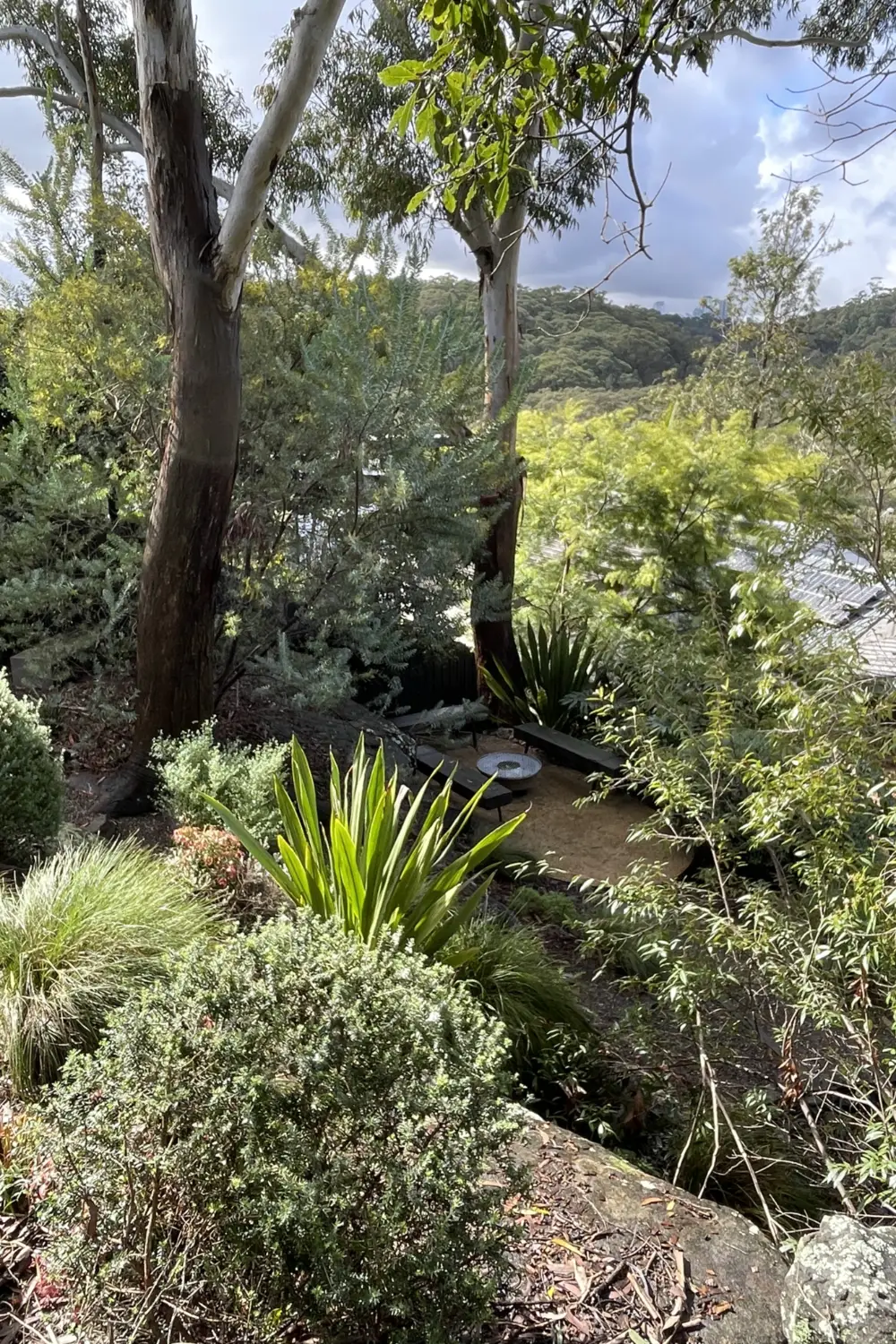
One of the greatest strengths of a sloping site is its potential to create perspective. Terraces can be oriented to capture views, while level changes add hierarchy and rhythm. Elevated platforms make perfect outdoor living zones, and lower terraces offer privacy or protected garden rooms.
Water features can take advantage of gravity for natural flow, while cascading plantings add softness and connection between levels. Even modest slopes can be transformed with subtle elevation changes that guide the eye and create an intuitive sense of movement.
In the hands of landscape architects, slopes become design assets that enhance the home’s architecture and the user experience. They provide visual drama while remaining grounded in practical functionality.
The Inspired Exteriors Approach
At Inspired Exteriors, we specialise in designing landscapes on sloping sites that feel effortless and enduring. Each project begins with an understanding of the land and how it interacts with architecture, access, and drainage. From terraced entertaining areas to hillside gardens that cascade naturally with the terrain, every detail is resolved to create a seamless connection between built form and nature.
Our role as landscape architects is to turn technical challenges into design opportunities. The goal is always the same: to shape outdoor spaces that feel balanced, refined, and timeless.
CONTACT OUR TEAM TODAY to discuss your sloping site project. Our experienced landscape architects can help transform complex terrain into functional, beautiful gardens.